

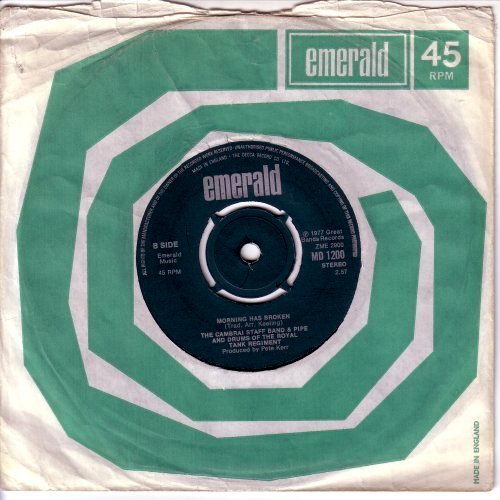
The record label of Belfast-based record distributors Solomon & Peres. Emerald first saw the light of day in 1959, via a licensing agreement with Decca's associates Vogue Records Ltd., of London. It issued a trio of EPs by Bridie Gallagher and a handful of LPs during 1959-60, and then seems to have been shelved. According to the covers of these early records, Emerald had offices in Dublin and Knightsbridge at the time. A couple of years later Mervyn Solomon of Solomon & Peres set about reviving the label. He paid a visit to America early in the year; an advert in Billboard of the 31st of March 1962 said that he was in search of Country, Religious (not Gospel), Scottish and Irish material to license. Similar adverts, claiming that Emerald was 'Ireland's leading record label', continued to appear in that magazine into 1964.
The revived Emerald was launched in the autumn of 1962, as noted in 'BB' of the 15th of September. The article noted that several albums sourced in America were in the pipeline, and that the artists involved included George Jones, Patsy Cline and Hank Locklin. In the event no records by those three appeared, but for some reason a single mentioned, 'I'm The One' b/w 'Daisy Doo' by Gord Lightfoot, which was licensed from Chateau Records, came out on Decca on the 19th of October with an originating credit to Chateau / Emerald. Emerald issued its first singles in September 1962, but several early ones consisted of tracks lifted from the 1960 Bridie Gallagher EPs, which had proven popular; a touch confusingly these retained the 'First published 1960' on their labels. This reborn Emerald replaced its Dublin office with one in Ann Street, Belfast, where it had a new studio, but kept the Knightsbridge office. As before, manufacture and distribution were handled by Vogue / Decca in the UK. Emerald also released records in the Republic of Ireland; British and Irish issues shared the same MD-1000 numbers but not every single came out in both countries.
Emerald served its target audience faithfully during the remainder of the 1960s, putting out a steady stream of mostly Irish material which mainly featured traditional singers, ceilidh bands, showbands and Country artists. Some Scottish material appeared, and there were several Country singles licensed from minor American labels - these tended to feature artists who were not well known in this country, such as Durward Erwin, Duke Rattray and Tom Tall. It enjoyed a great deal of success in Ireland, and even managed to register a UK Singles Chart hit in the shape of Frankie McBride's 'Five Little Fingers' b/w 'Do You Mind If You Leave Me Sleeping' (MD-1081; 6/67), which reached the No.19 spot in 1967 - it was the first time that an Irish company had managed to get a single into the British Chart. In 1968 a low-price album label was introduced, Emerald Gem ('BB', 25th May). It appears to have replaced the standard Emerald label for album releases in 1970, Emerald becoming singles-only.
In the spring of 1970 Decca ceased to use the Vogue name, which resulted in Emerald's records carrying a credit to Decca instead. The new decade found Emerald beginning to expand its scope a little. In 1968 it had put out a compilation album of Military / Pipe / Silver / Accordion bands from Belfast on a new label, Great Bands; starting in 1970 it followed that up with a series of other LPs on that label, featuring individual bands. These bands were often Scottish, but Military bands from Britain and New Zealand were also featured. Sadly for the purposes of this site there were no 7" releases. 1970 also saw the arrival of a new label, 'M and M' (q.v.). According to 'Record Retailer' of the 7th of November it was to be a stablemate of Emerald and was intended to feature Pop and Country 'with international potential'. The two Ms stood for Mervyn Solomon and his father Maurice, and the first three singles were due out on the 27th. M and M proved to be fairly short-lived, expiring in the spring of 1974, but by that time the main Emerald label had started dipping its toe into the Pop and Glam Rock markets - it even put out a single by Rock 'n' Roll band Shakin' Stevens & The Sunsets, 'Money Honey' b/w 'Holy Moley 2001' (MD-1176; 8/74), which is very collectable nowadays. It continued to concentrate on Irish and Country but it found a big-selling artist in Scots singer Sydney Devine - 'BB' of the 19th of July 1975 noted that Devine had sold half a million units.
A felt need to provide an outlet for the company's less obviously Irish material resulted in the arrival of the Mint (q.v.) label, in 1975. According to 'BB' of the 23rd of August the development had been under discussion since 1973. The article added that there was to be no big push for Mint's first single, as its artist, Fran O'Toole, had been shot dead along with several other members of the Miami Showband after the single had been scheduled. It was expected that the royalties would go to his widow. The success of Sydney Devine prompted the company to look for more Scottish artists ('BB', 30th April 1977), but 'BB' of the 28th of January 1978 said that the emphasis was to be on Country from that point. The article claimed that product had been licensed from American artists including Red Sovine and Dolly Parton, but if that was the case none of it seems to have been issued. As part of the move the album-only Country Gem series was created, to allow the Country material to be distinguished from the material on Emerald Gem ('BB', 24th June 1978). That same year there was a shift away from singles: the final Emerald single came out in November, leaving Mint as the company's outlet for 7" records. At the close of the decade the long relationship with Decca came to an end when Decca was taken over by Polygram. Emerald switched to Spartan for distribution, and continued to plough its own particular furrow throughout the '80s and beyond.
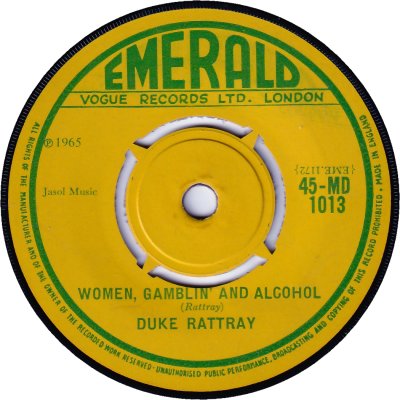
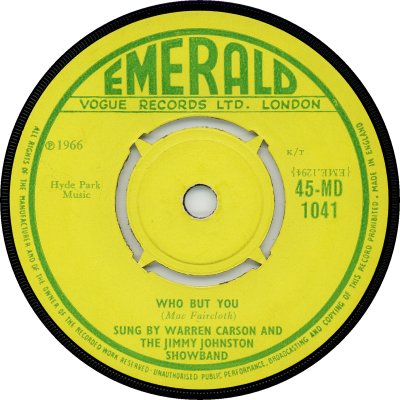
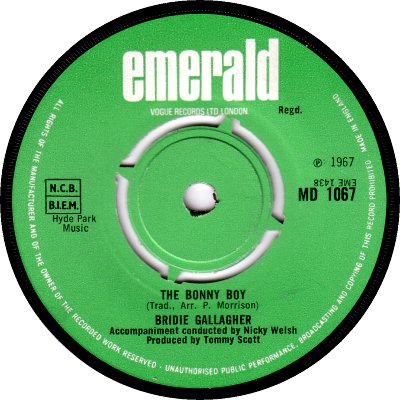
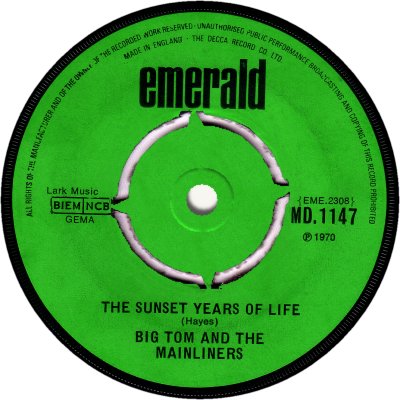
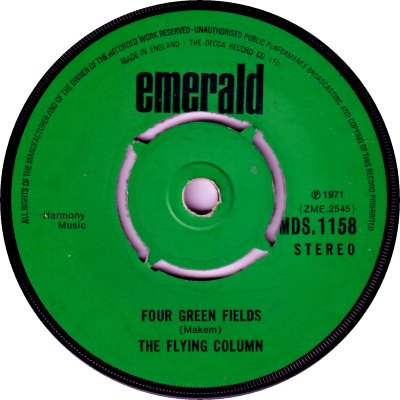
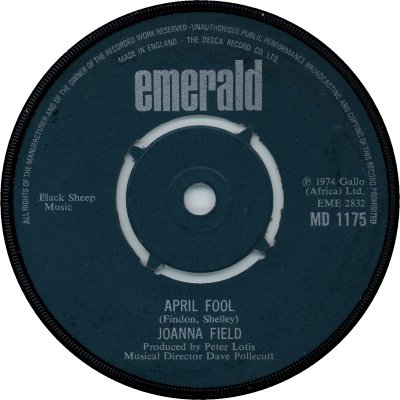
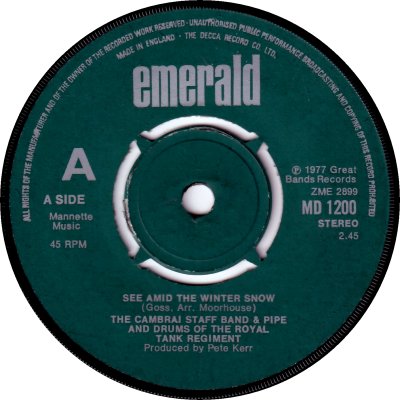
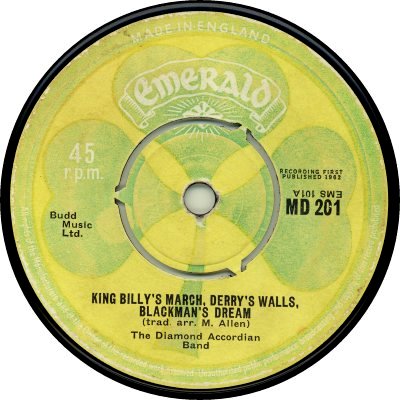
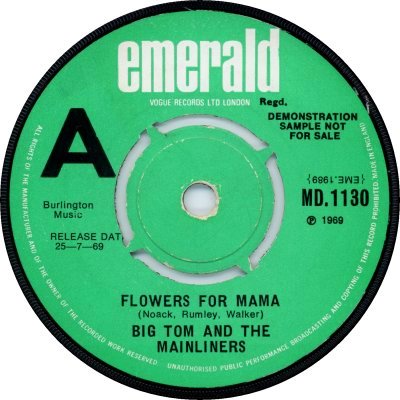
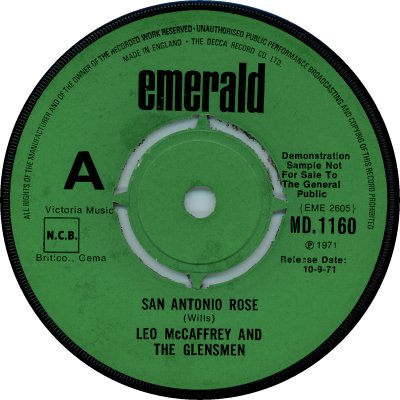
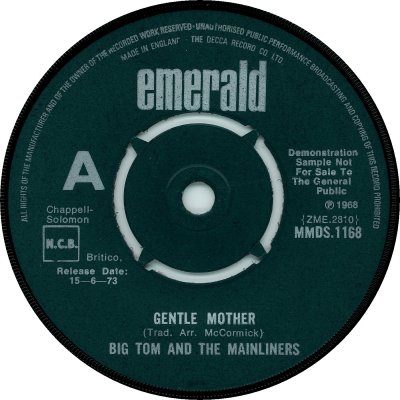
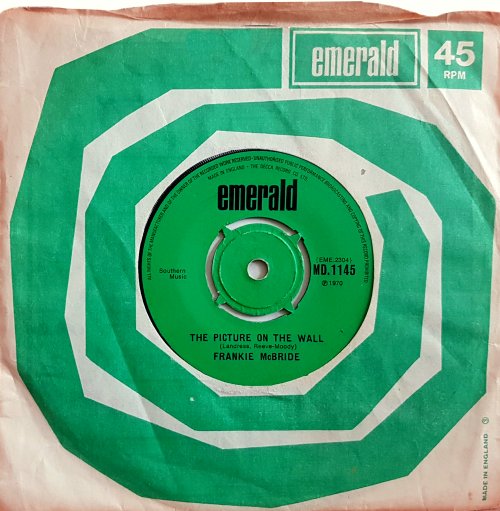
Emerald's singles went through four label designs down the years, though the last three were closely related. The first label was yellow with green printing, and it had a credit to Vogue Records Ltd. London (1, 2); this lasted until the summer of 1966, when it was replaced by a pale green label with a white, lower-case, logo (3). With minor changes, this pale green label saw out the 1960s. A label in a richer green with a black logo was introduced in the second quarter of 1970, and the reference to Vogue Records was replaced by one to The Decca Record Co (4, 5). A company sleeve in the Decca family style was introduced at the same time (12, 13). Finally the logo turned silver and the colour blue-green (6). In the summer of 1976 a medium-sized 'A' was added to the 'A' side (7). A short-lived dance music series from 1962 had labels with a shamrock design in green on yellow (8) and numbers in the MD-200s.
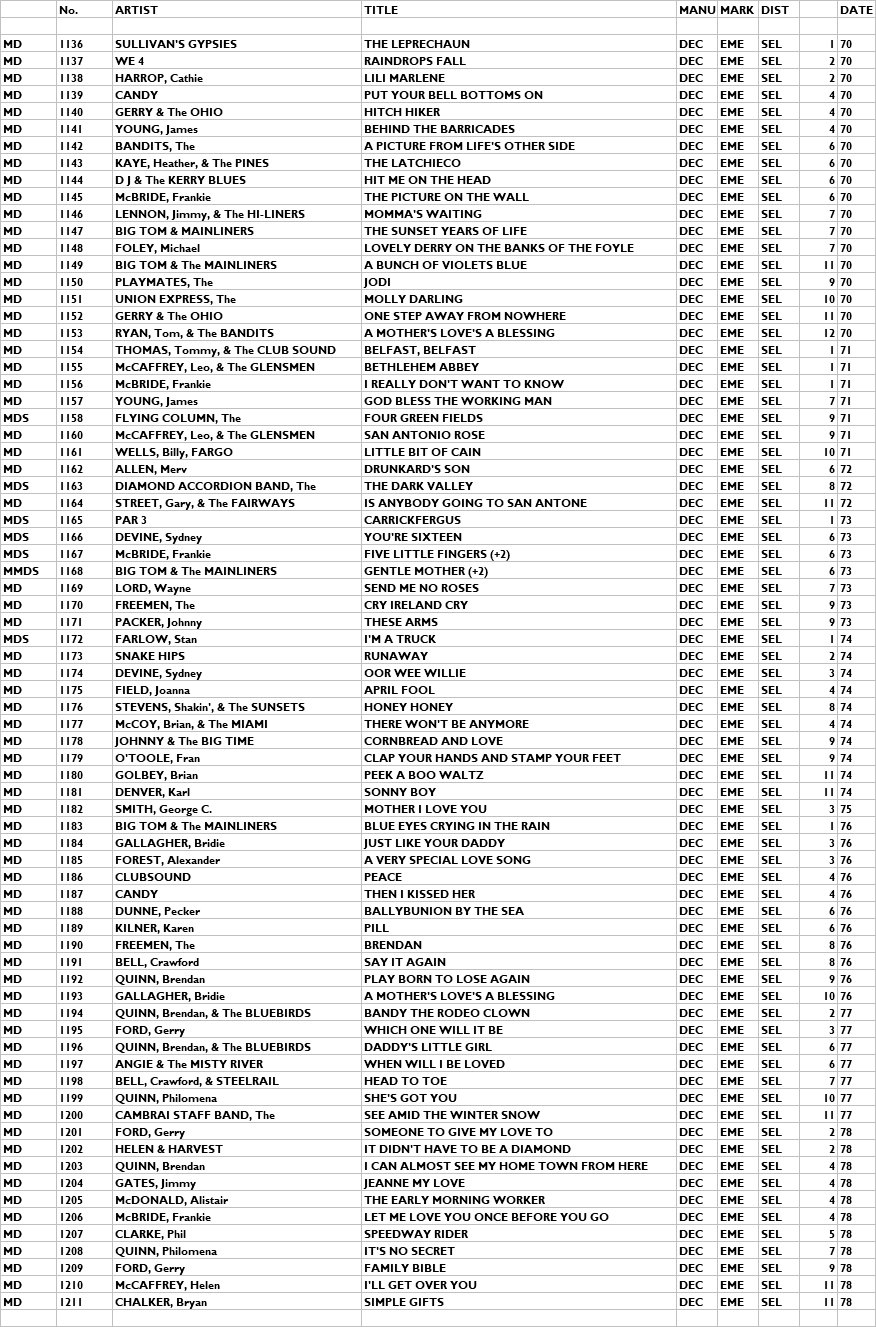
Demonstration copies were introduced during the 'pale green label' era, and were in the Decca 'house' style with a solid 'A' and the appropriate text (9, 10, 11); demos appear to have been discontinued in the summer of 1976. Numbering of singles was mainly in an MD-1000 series; starting in September 1971 stereo singles were given an 'S' after the MD (5) but the practice was discontinued when stereo became the norm, the final MDS being from January 1974. A three-track stereo 'maxi single', 1168, was given an 'MMDS' prefix, the extra 'M' presumably standing for 'Maxi'; oddly MDS-1167, which was also a three-track stereo maxi-single and which came out at much the same time, wasn't given the extra 'M'. The discography below only covers the 1970; a fuller one can be found on the 45Cat site. As stated above, there were no Emerald singles after the end of 1978, but there was at least one release on the Emerald Gem label in the'80s: Ann Williamson's 'When You And I Were Young Maggie' b/w 'Forsaking All The Rest' (MD-1222), which came out in May 1986.


Copyright 2006 Robert Lyons.